
The 2026 Guide To The Most Popular Workplace Personality Tests



Workplace personality tests play a crucial role in modern HR and recruitment, enabling organizations to understand candidate and employee behavior, enhance team dynamics, and make smarter, data-driven hiring decisions in today’s rapidly changing work environment.
Did you know? According to Fortune, 80% of Fortune 500 companies use personality assessments for various purposes, including recruitment, career development, leadership training, and team building.
As workplaces become more diverse and complex, employers recognize that insights into personality go beyond resumes and technical skills. Personality tests reveal individual traits, communication styles, and motivations, helping businesses build stronger and more balanced teams, improve collaboration and work culture, and uncover leadership potential.
Instead of depending on a single test, many organizations utilize a range of different personality assessments tailored to specific needs, such as trait-based models like the Big Five, behavioral frameworks like DISC, and deeper motivational tools like the Enneagram. This multi-faceted strategy helps HR teams align hiring, employee development, and succession planning with both individual strengths and business objectives.
Whether you are a recruiter, hiring manager, or talent acquisition expert, you may find yourself asking:
- What are the most popular types of personality tests used for hiring?
- What do these tests measure?
- What are the pros of workplace personality tests?
- Are there any limitations or risks to consider with personality assessments?
This comprehensive guide dives into the most widely used workplace personality tests, explaining their frameworks, and evaluating their real-world applications.
Keep reading to discover the top personality tests shaping recruitment and employee development in 2026!
Contents
- What is a workplace personality test?
- What are the different types of personality tests?
- What are the benefits of using personality tests in hiring and HR?
- Challenges and limitations of personality tests for employment
- A Success story with personality tests
- Why choose Assess Candidates for personality testing?
Now we’ve outlined what this article covers, let’s dive deeper into understanding what a personality test is.
1. What is a workplace personality test?
A work personality test, or personality questionnaire, is a type of pre-employment psychometric assessment that evaluates an individual’s personality traits, preferences, work style, and characteristics across different situations. Unlike skills-based assessments, personality tests generally focus on an individual’s inherent behavioral tendencies to predict whether they are a good fit for a specific role, team, or company culture.

Depending on the organization’s goals, personality tests can be used at different stages of the employee lifecycle. In recruitment, you can use them during initial screening to quickly determine a candidate’s cultural fit, or later in the interview process to inform deeper conversations about strengths, motivations, and teamwork style.
Beyond hiring, these assessments also play a valuable role in onboarding, upskilling and reskilling initiatives, team building exercises, and leadership development or succession planning.
Enhance your recruitment process with our scientifically validated personality test. Hire For Free
How do personality tests work?
Personality assessments are often based on well-established psychological models, such as:
- The Big Five (OCEAN): measuring openness, conscientiousness, extraversion, agreeableness, and neuroticism.
- DISC: measuring dominance, influence, steadiness, and conscientiousness.
- Myers–Briggs (MBTI): categorizing individuals into 16 personality types based on preferences.
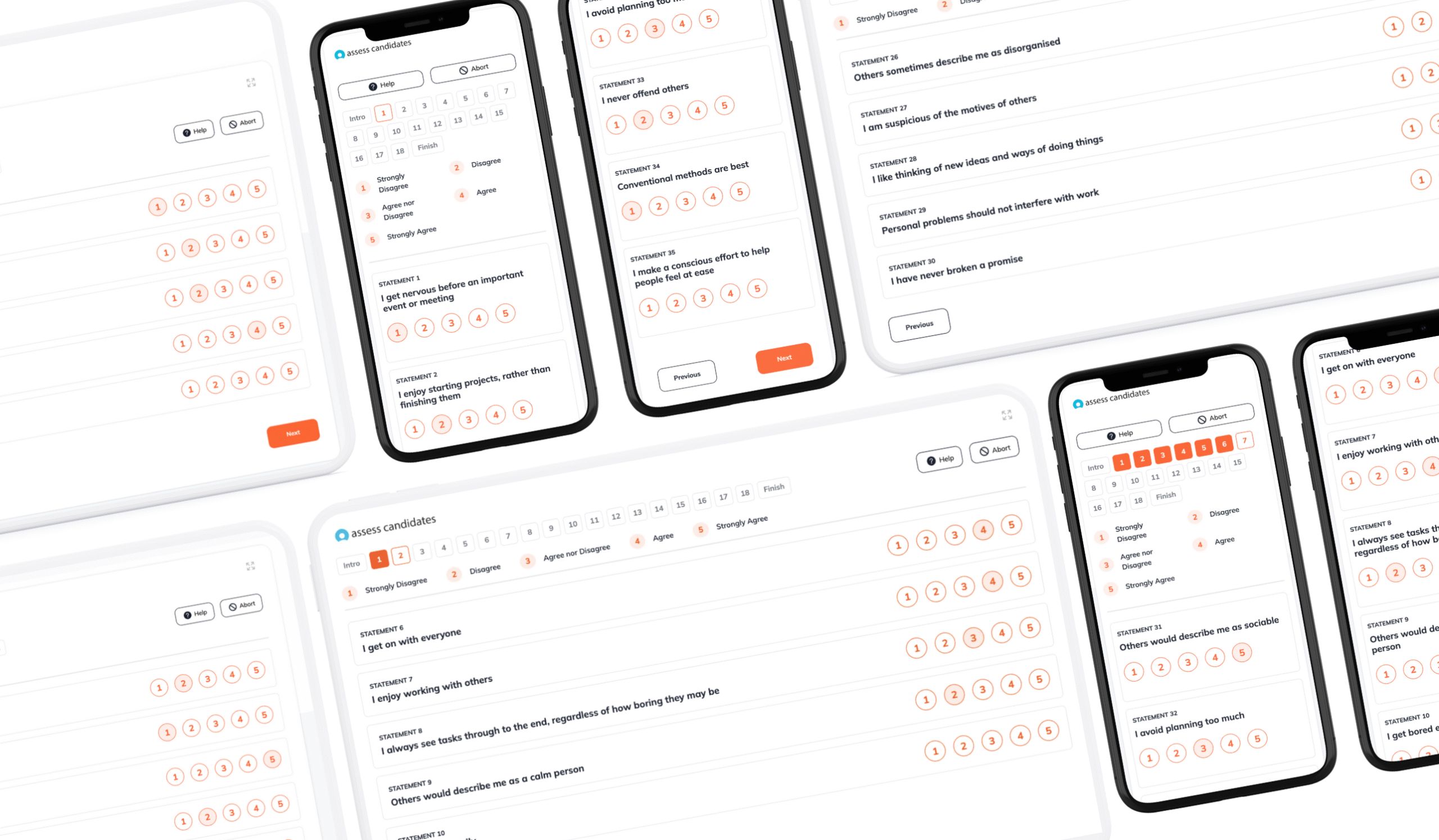
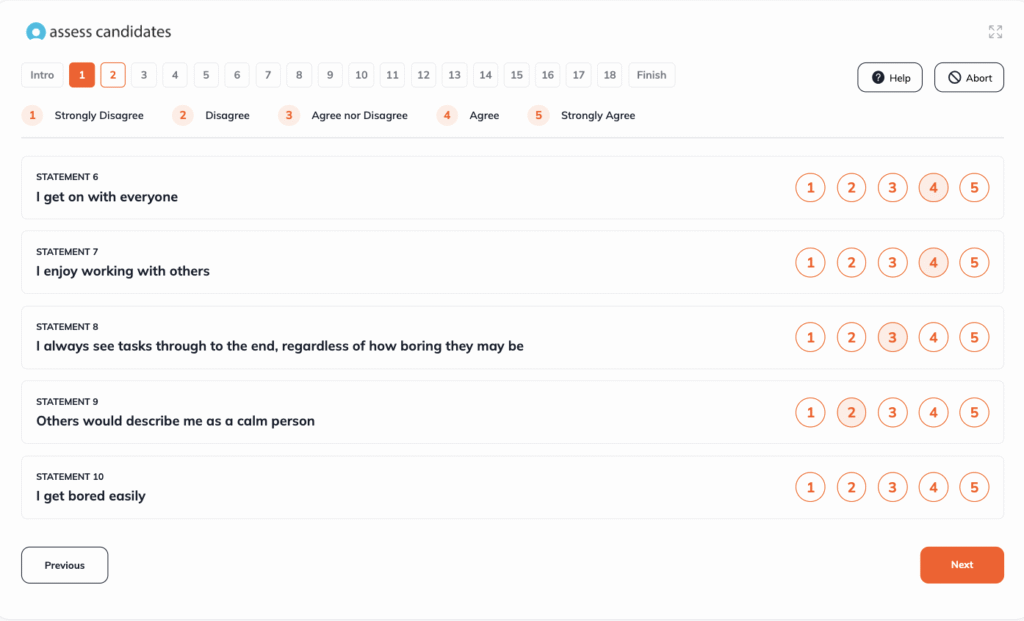
Most work personality tests present statements about personality traits or behaviors, asking individuals to indicate their level of agreement. Their responses build a personality profile that provides HR teams with insights into communication styles, problem-solving approaches, and potential role alignment.
In the following section, we will explore in detail the different types of personality tests for hiring and beyond, and how each one works.

2. What are the different types of personality tests?
HR teams today have access to a wide range of personality tests, each designed to measure different behaviors, traits, and motivations. By revealing how individuals think, communicate, make decisions, and collaborate, these assessments go beyond surface-level impressions. They provide valuable insights into workplace dynamics and help predict how well a candidate or employee is likely to adapt, align with, and thrive within a specific role or work culture.

The following are the different types of personality tests used in organizational psychology and employment:
Type-based Personality Tests
Type-based personality tests sort individuals into distinct personality types or categories based on common patterns of thinking, feeling, and behaving. These fixed categories reflect broad preferences in areas such as decision-making, communication, and problem-solving.
The following are some of the major type-based personality tests:
Myers-Briggs Type Indicator (MBTI)
Myers-Briggs Type Indicator (MBTI) is a personality assessment tool that categorizes individuals into 16 distinct personality types, identifying preferred ways of thinking, behaving, and interacting with the world.
Recruiters widely use this type of personality test during hiring to match candidates with teams that share compatible work preferences, reduce potential workplace conflict, and foster stronger professional relationships.
How does the MBTI work?
MBTI assesses 4 key dichotomies, each representing two opposing preferences:
- Introversion (I) vs Extraversion (E): The first aspect represents the opposite ways in which individuals direct and receive energy. Those representing introversion (I) draw energy from the inner world of thoughts and reflections, focusing attention inward for self–reflection. Individuals representing extraversion (E) draw energy from the outer world of people and experiences, directing their attention outward through engagement and action.
- Sensing (S) vs Intuition (N): The second aspect represents the opposite ways in which individuals take in information. Individuals representing sensing (S) prefer concrete information gathered through the five senses, focusing on what is tangible and real. While others representing intuition (N) prefer information drawn from patterns and associations, focusing on possibilities and what could be.
- Thinking (T) vs Feeling (F): The third aspect represents the opposite ways in which individuals decide and come to conclusions. Those representing thinking (T) prefer stepping back from situations to analyze them objectively, making decisions based on logical reasoning. Individuals representing feeling (F) prefer stepping into situations in line with human values and motives, making decisions based on empathy and personal principles.
- Judging (J) vs Perceiving (P): The fourth aspect represents the opposite ways in which individuals approach the outside world. These people with the judging (J) dimension reflect a preference for living in a planned and organized way, enjoying closure and making firm decisions. In comparison, individuals representing perceiving (P) reflect a preference for living spontaneously and flexibly, enjoying the freedom to keep options open.
What is MBTI’s framework or theory?
The Myers-Briggs Type Indicator (MBTI) is based on Carl Jung’s theory of psychological types developed in the 1920s, which was later adapted and expanded by Katharine Briggs and Isabel Myers.
The MBTI framework categorizes personality into 4 dichotomies, resulting in 16 distinct personality types that reflect individual preferences in perceiving the world and making decisions.
For instance, the INFJ (Advocate) personality type combines Introverted, Intuitive, Feeling, and Judging traits. People with this type are insightful and idealistic, driven by a strong sense of purpose. They are empathetic and organized, often striving to help others while carefully planning their actions to achieve meaningful goals.
Enneagram Personality Test
The Enneagram is a personality framework that identifies 9 distinct personality types, each driven by core motivations, fears, and desires. It looks beyond surface-level traits to uncover the underlying psychological drivers that influence how individuals think, feel, and behave.
This personality test type is primarily used by HR teams for employee development and team building to improve self-awareness, communication, and collaboration within teams. It is particularly useful for leadership coaching, conflict resolution, and career growth planning.
How does the Enneagram work?
What makes the Enneagram personality assessment unique is its focus on personal growth. It highlights strengths, potential blind spots, how individuals may respond under stress, and how they can develop healthier patterns of behavior.
The following are the 9 Enneagram categories:
- Type 1: The Reformer – Principled, perfectionistic, and purposeful.
- Type 2: The Helper – Caring, generous, and people-oriented.
- Type 3: The Achiever – Ambitious, adaptable, and success-driven.
- Type 4: The Individualist – Creative, expressive, and introspective.
- Type 5: The Investigator – Analytical, perceptive, and independent.
- Type 6: The Loyalist – Responsible, security-focused, and cautious.
- Type 7: The Enthusiast – Spontaneous, adventurous, and optimistic.
- Type 8: The Challenger – Assertive, decisive, and protective.
- Type 9:The Peacemaker – Easygoing, agreeable, and conflict-averse.
What is the Enneagram’s framework or theory?
The Enneagram blends ancient wisdom with modern psychology to map 9 distinct personality types onto a geometric figure called the Enneagram symbol. This symbol shows how each type connects to others through patterns of growth and stress, and how neighboring “wing” types influence them.
The system groups the 9 types into 3 “Centers of Intelligence”: the Head, Heart, and Gut, which indicate whether a type primarily processes the world through thinking, feeling, or instinct.
For example: Type 1 (The Reformer), as per the Enneagram, is principled, purposeful, and self-disciplined, motivated by a deep commitment to integrity and self-improvement. These individuals set high standards for themselves and others, approach life with a strong sense of responsibility, and act in alignment with their values.
Keirsey Temperament Sorter
The Keirsey Temperament Sorter is a personality assessment that sorts individuals into 4 primary temperament groups, each reflecting unique patterns of behavior, communication styles, and motivation.
While it can provide insights during recruitment, it is most commonly used to enhance self-awareness, teamwork, and leadership development in personal, workplace, and social settings.
How does the Keirsey Temperament Sorter work?
Keirsey model identifies 4 temperaments based on behavioral tendencies and communication preferences:
- Artisan: Practical, spontaneous, and action-oriented.
- Guardian: Responsible, detail-oriented, and dependable.
- Idealist: Compassionate, enthusiastic, and focused on personal growth.
- Rational: Analytical, strategic, and problem-solving focused.
What is Keirsey’s framework or theory?
Developed by psychologist David Keirsey, this personality model builds on Carl Jung’s personality type theory and the MBTI. By condensing the 16 Myers-Briggs types into 4 broader temperaments, the Keirsey Sorter highlights observable behaviors and interaction patterns. This makes it a practical tool for improving collaboration, leadership, and interpersonal understanding in organizations.
For instance, an employee with an Artisan temperament is adaptable, energetic, and excels at tackling immediate challenges. They enjoy hands-on activities and flourish in environments that encourage spontaneity and resourcefulness.
DISC Personality Test
The DISC Personality Test is a behavioral assessment that classifies individuals into 4 main personality styles. Widely used in recruitment and employee development, it helps organizations understand how candidates are likely to act, communicate, and interact with others in work and social settings.
How does the DISC personality assessment work?
DISC measures 4 key behavioral traits:
- Dominance (D): How a candidate tackles problems and challenges, typically in an assertive, confident, and results-focused manner.
- Influence (I): How a candidate engages socially, often showing enthusiasm, persuasiveness, and outgoingness.
- Steadiness (S): How a candidate handles change and pace, usually with calmness, supportiveness, and reliability.
- Conscientiousness (C): How a candidate approaches rules and structure, emphasizing attention to detail, analysis, and precision.
While everyone displays a mix of all these traits, most people show a stronger tendency toward one or two, shaping their natural style of working and interacting with others.
What is the framework or theory behind DISC?
The DISC personality model draws on psychologist William Moulton Marston’s theory of 4 primary emotions and behavioral responses by simplifying human behavior into 4 quadrants.
Unlike personality theories that focus on inner motives, DISC emphasizes observable actions, making it a practical tool for recruitment, team building, and leadership development.
Example in practice: Candidates with a high Dominance (D) style in the DISC model tend to be confident, assertive, and driven by results. They approach challenges head-on, prefer quick decision-making, and thrive in competitive environments, often taking charge in group settings and focusing on achieving goals efficiently.
After exploring type-based personality tests, let’s discuss the major trait-based personality assessments.
Trait-based Personality Tests
Trait-based personality tests evaluate individuals along continuous scales of specific characteristics, rather than placing them into fixed categories. They often draw on well-established psychological models, most notably the Five-Factor Model (Big Five), which measures the degree to which a person demonstrates the traits: openness, conscientiousness, extraversion, agreeableness, and emotional stability.
Other frameworks may emphasize different dimensions, but the core idea remains the same: by measuring traits on a spectrum, these tests provide a nuanced picture of personality that can help employers predict workplace behaviors, cultural fit, and long-term performance potential.
Here are some of the most common trait-based personality tests:
Big Five Personality Test (OCEAN)
The Big Five Personality Test, also known as the OCEAN Model, is one of the most scientifically validated frameworks for understanding personality. It measures 5 broad personality dimensions: openness, conscientiousness, extraversion, agreeableness, and neuroticism.
By analyzing these traits, employers predict how individuals are likely to think and behave, especially in challenging situations, while also assessing their compatibility with team dynamics and organizational culture.
Because of its strong research foundation, the Big Five model underpins many workplace assessments, such as Assess Candidates Work-style Personality Questionnaire (WPQ). This makes it a trusted tool not only for recruitment, but also for employee learning, leadership training, and promotion strategies.
Here’s what our Work Personality Questionnaire at Assess Candidates looks like!
Select candidates that align with your role, team, and company culture our Big Five Personality Test! LEARN MORE
How does the Big Five Personality Test work?
The Big Five Personality Test measures the following 5 traits, forming the acronym OCEAN:
- Openness to Experience: Reflects a candidate’s creativity, curiosity, and enthusiasm for new experiences versus a preference for routine and structure.
- Conscientiousness: Indicates how careful, organized, self-disciplined, and responsible a candidate is compared to being disorganized, spontaneous, and adaptable to change. Conscientiousness is one of the strongest predictors of job success, especially in roles of low to moderate complexity.
- Extraversion: Measures a candidate’s sociability, energy, and enthusiasm in group settings versus a reserved, thoughtful approach and comfort in solitude.
- Agreeableness: Shows a candidate’s compassion, cooperativeness, and empathy toward others’ needs versus being more self-interested, independent, and goal-driven.
- Neuroticism (Emotional Stability): Assesses emotional resilience, calmness, and optimism, contrasted with anxiety, stress, and negative thinking.
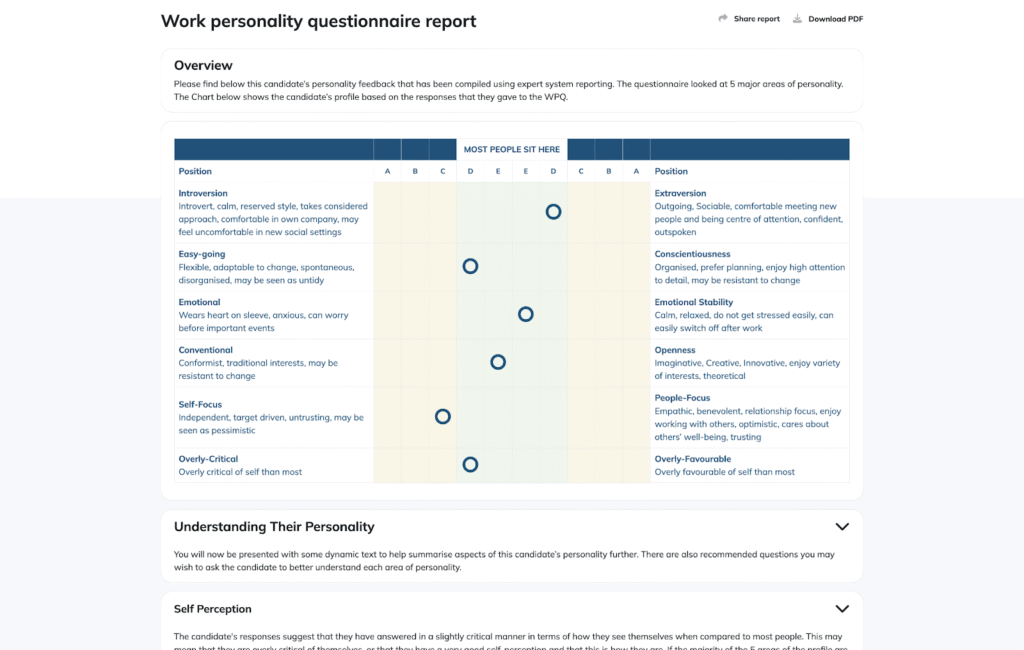
Here is what our Work Personality Questionnaire Report at Assess Candidates looks like – highlighting a candidate’s position of each personality trait!
What is the Big Five framework or theory?
TheBig Five model was developed through decades of psychological research and scientific factor analysis to identify the fundamental dimensions of personality. It stems from the lexical hypothesis, which proposes that the most important personality traits are encoded in language.
By statistically analyzing thousands of trait-descriptive words, researchers consistently identified 5 broad factors that capture the majority of personality differences among individuals. This model is widely valued for its high reliability, validity, and cross–cultural applicability.
For example: A candidate placed on the higher scale in Conscientiousness tends to be organized, dependable, and disciplined. They approach tasks methodically, plan, and follow through on commitments, making them reliable team members.
Sixteen Personality Factor Questionnaire (16PF)
The Sixteen Personality Factor Questionnaire (16PF) is a self-report personality test developed to assess normal personality traits to describe and predict how individuals behave in everyday, social, and work situations. Unlike clinical assessments, it focuses on general personality rather than psychological disorders, making it a practical tool for recruitment but primarily career development, coaching, leadership training, and team building.
How does the 16PF work?
The 16 PF test assesses 16 primary personality factors:
- Warmth: Outgoing and attentive to others vs. reserved and detached.
- Reasoning: Abstract, quick thinker vs. concrete, slower to grasp ideas.
- Emotional Stability: Calm and resilient vs. reactive and easily upset.
- Dominance: Assertive and forceful vs. cooperative and accommodating.
- Liveliness: Enthusiastic and spontaneous vs. serious and cautious.
- Rule–Consciousness: Dutiful and conscientious vs. expedient and nonconforming.
- Social Boldness: Adventurous and confident vs. shy and threat-sensitive.
- Sensitivity: Empathic and aesthetic-minded vs. tough-minded and objective.
- Vigilance: Skeptical and suspicious vs. trusting and accepting.
- Abstractedness: Imaginative and absorbed in ideas vs. practical and grounded.
- Privateness: Discrete and non-disclosing vs. open and forthright.
- Apprehension: Self-doubting and worrying vs. self-assured and confident.
- Openness to Change: Flexible and experimenting vs. traditional and conservative.
- Self–Reliance: Independent and resourceful vs. group-oriented and affiliative.
- Perfectionism: Organized and disciplined vs. flexible and unstructured.
- Tension: Restless and driven vs. relaxed and easygoing.
These primary traits cluster into 5 global (higher-order) factors, which resemble the Big Five:
- Extraversion
- Anxiety or Emotional Stability
- Tough-Mindedness vs. Receptivity
- Independence
- Self-Control
What is the framework or theory of the 16PF?
16PF was developed by Raymond B. Cattell in the 1940s-50s grounded in Cattell’s Trait Theory of Personality, which differentiates between:
- Surface Traits: Observable behaviors, such as being talkative or friendly.
- Source Traits: Deeper, underlying personality structures that drive surface behaviors.
By applying factor analysis to large personality datasets, Cattell identified 16 source traits as the fundamental building blocks of personality, which the 16PF systematically assesses.
For instance, a candidate scoring high on Social Boldness is likely to approach new situations with confidence and initiative. They tend to take calculated risks, engage comfortably with others, and assert themselves in group settings, making them well-suited for roles that require leadership, persuasion, or public interaction.
Six-Factor Personality Questionnaire (SFPQ)
The Six-Factor Personality Questionnaire (SFPQ) is a cost-effective personality assessment tool designed to evaluate 6 broad dimensions and 18 facets of normal personality. With 108 items, the SFPQ can assess the full spectrum of personality traits, helping organizations select candidates during hiring whose profiles best fit the role, support counseling and career guidance, improve workplace relationships and team dynamics, conduct research across various fields, and promote self-awareness.
How does the Six-Factor Personality Test work?
SFPQ measures 6 broad personality dimensions, each with multiple subscales:
- Independence: Measures an individual’s self-reliance and autonomy in thought and action.
- Industriousness: Measures an individual’s goal-orientation, persistence, and work ethic.
- Methodicalness: Measures an individual’s organization, attention to detail, and careful planning.
- Studiousness: Measures an individual’s interest in learning and intellectual engagement.
- Agreeableness: Measures an individual’s cooperativeness, empathy, and interpersonal harmony.
- Openness to Experience: Measures an individual’s receptiveness to novelty and variety.
What is the SFPQ framework or theory?
SFPQ builds on the Five-Factor Model by enhancing Conscientiousness with more detailed facets like Industriousness and Methodicalness. Its developers used a modern construct-oriented approach, selecting items from large pools of the Personality Research Form (PRF) and the Jackson Personality Inventory (JPI) to minimize response biases such as social desirability. This careful process ensures test reliability and validity.
For example: A candidate scoring high on Methodicalness prefers to approach projects with detailed planning and structure. They tend to create organized timelines, break tasks into manageable steps, and reduce errors through careful checking, making them well-suited for roles that demand precision and consistency.
Hogan Personality Inventory (HPI)
The Hogan Personality Inventory (HPI) for hiring evaluates the bright side of personality, revealing how individuals relate to others when they are at their best. Whether employers aim to hire the right candidate or develop effective leaders, using Hogan’s test provides valuable insights into how candidates work, lead, and succeed within an organization.
What does the HPI measure?
The HPI personality test measures 7 primary personality scales:
- Adjustment: Measures emotional stability, resilience, and the ability to stay calm under pressure.
- Ambition: Assesses drive, initiative, and the desire for leadership roles and achievement.
- Sociability: Evaluates an individual’s tendency to seek out and enjoy social interaction.
- Interpersonal Sensitivity: Evaluates empathy, tact, and skill in building positive relationships.
- Prudence: Reflects an individual’s self-discipline, reliability, and attention to rules and detail.
- Inquisitiveness: Measures curiosity, imagination, and interest in exploring new ideas.
- Learning Approach: Assesses an individual’s enjoyment of learning, seeking knowledge, and staying informed.
These traits provide insight into how individuals manage stress, interact socially, and approach work tasks.
What is the framework or theory of HPI?
HPI, developed in the 1980s, is grounded in the Big Five personality model and framed by socioanalytic theory. This theory suggests that the main goals in social life are to get along with others and to advance within the social hierarchy.
This test uses empirical research to link personality characteristics with job performance and career success, helping to predict how individuals are likely to behave in typical work situations.
For example: A candidate scoring high in Ambition and Adjustment may demonstrate strong leadership qualities and remain calm under pressure, making them well-suited for management roles.
Caliper Profile Personality Test
The Caliper Profile personality test is a scientifically validated and objective assessment that evaluates candidates’ personality traits and motivations, providing insights into their likely workplace behaviors and potential.
This assessment test asks candidates to select statements that best or least describe their workplace personality, alongside abstract reasoning questions that evaluate their problem-solving skills. These responses generate scores that employers use to compare candidates, with higher scores indicating a stronger likelihood of exhibiting traits and behaviors important for the role.
How does the Caliper Profile personality test work?
The Caliper Profile personality test measures 22 personality attributes, such as assertiveness, empathy, resilience, abstract reasoning, and detail orientation, using local norms across various countries. These traits directly map workplace behaviors and performance expectations, enabling an accurate prediction of job success.
What is Caliper Profile’s framework or theory?
With nearly 60 years of research behind it, the Caliper Profile helps organizations make more informed hiring decisions. It assesses individuals against validated job models, enabling organizations to objectively determine their fit for both current roles and future development opportunities.
For instance, when hiring a project manager, a company might use the Caliper Profile to assess candidates’ organizational skills and decision–making abilities. A candidate who scores high on traits like conscientiousness and problem-solving is more likely to manage projects effectively, meet deadlines, and adapt to challenges, helping the employer identify the best fit for the position.
Now, let’s move on to our third type of personality tests: work-style and motivation assessments.
Work-style and Motivation Assessments
Work-style and motivation assessments examine how individuals tackle tasks, engage with others, and what motivates their performance. Focusing on behavioral drives, work preferences, and role fit, these assessments provide insights that organizations can leverage to enhance role alignment, increase job satisfaction, and boost long-term employee engagement.
The following are some work-style and motivation assessments:
Predictive Index (PI) Behavioral Assessment
The Predictive Index (PI) evaluates a candidate’s personality and work-related skills to build a comprehensive candidate profile. It focuses on 4 primary personality traits: Formality, Dominance, Patience, and Extraversion, along with two secondary traits: Decision-making and Response Level.
The PI behavioral assessment is a short, untimed, free-choice, stimulus-response tool, which takes about 10 minutes to complete, and asks candidates to select the words that best describe themselves and how they believe others expect them to behave.
How does the Predictive Index (PI) behavioral assessment work?
PI measures 4 core behavioral drives:
- Dominance: The drive to assert control and influence over people or situations.
- Extraversion: The drive for social interaction and collaboration.
- Patience: The drive for consistency, stability, and routine.
- Formality: The drive to adhere to rules, structure, and processes.
For example: A candidate with high Dominance and Extraversion in the Predictive Index acts assertively, engages easily with others, and thrives on challenges. They excel in leadership roles and enjoy motivating others to reach goals.
SHL Occupational Personality Questionnaire (OPQ)
SHL Occupational Personality Questionnaire (OPQ) is an extremely popular personality test that helps improve hiring decisions by accurately predicting a candidate’s potential. This assessment matches individual working preferences directly to business requirements, and makes accurate, reduced-bias in talent decisions that increase your workforce’s diversity, impact, and retention.
The OPQ test is around 20-minutes long and can be completed in any of 37 languages. Moreover, the test is designed mobile-first, eliminating device result deviation.
How does the SHL Occupational Personality Questionnaire (OPQ) work?
SHL Occupational Personality Questionnaire (OPQ) measures a candidate’s role fit and future performance, especially for interpersonal and client-facing roles where adaptability and resilience are key factors for success. Additionally, the reusable data from the OPQ informs long-term initiatives such as high-potential programs and development planning.
The OPQ evaluates the candidate on 3 core areas:
- Interpersonal style: How individuals build relationships, influence others, and collaborate.
- Thinking style: How they approach problem-solving, make decisions, and process information.
- Emotional style: How they respond to stress, adapt to change, and regulate emotions.
For instance, if a statement like, “I enjoy meeting new people,” is displayed, the candidate has to state whether they agree with it by clicking on any one of the circles from the options, “Strongly Disagree”, “Disagree”, “Unsure”, “Agree”, “Strongly Agree”.
Talent Q Dimensions
Talent Q Dimensions is an online personality assessment developed by Korn Ferry that profiles workplace traits, behaviors, and preferences. It helps organizations assess candidate fit for specific roles and supports talent management throughout the employee lifecycle, including recruitment, team development, and organizational change.
How does the Talent Q Dimensions personality test work?
This personality assessment test evaluates 15 distinct traits organized into 3 broad domains:
- People & Relationships: Examines how a candidate handles communication, influencing others, and workplace relationships.
- Tasks & Projects: Looks at thinking style, task management, organization, and information analysis.
- Drives & Emotions: Assesses adaptability, coping with stress, motivation, and emotional response.
What is Talent Q Dimensions’s framework or theory?
Talent Q developed Dimensions with scientific rigor and grounded it in occupational psychology principles to ensure its relevance to workplace performance. This customizable personality tool can well align with an organization’s competency framework, providing flexible and objective insights across the entire employee lifecycle.
For example: A candidate scoring high in Influence within the People & Relationships domain may naturally motivate and collaborate well with others, ideal for leadership or client-facing roles. On the other hand, someone who scores highly in under Tasks & Projects might excel in roles that demand structured thinking and problem-solving, such as data analysis or strategic planning.
Hogan Motives, Values, Preferences Inventory (MVPI)
The Hogan Motives, Values, Preferences Inventory (MVPI) is another core Hogan assessment that explores the core goals, drivers, and interests that determine what the individual desires and strives to attain.
The MVPI test consists of a self-report questionnaire with over 200 items rated on a Likert scale. Unlike assessments that measure skills or abilities, the MVPI focuses specifically on intrinsic motivators that drive behavior and decision-making.
How does the MVPI work?
The MVPI measures the following 10 core values/motives, each representing what a person finds rewarding or meaningful at work:
- Recognition: Measures the extent to which an individual needs public acknowledgment and status.
- Power: Measures the extent to which an individual seeks control and influence over others.
- Hedonism: Measures the extent to which an individual prioritizes fun, pleasure, and social stimulation.
- Altruistic: Measures the extent to which an individual is driven by helping and serving others.
- Affiliation: Measures the extent to which an individual values collaboration and belonging in teams.
- Tradition: Measures the extent to which an individual respects rules, structure, and conventional norms.
- Security: Measures the extent to which an individual prefers stability and predictability.
- Commerce: Measures the extent to which an individual is motivated by money, business, and financial success.
- Aesthetics: Measures the extent to which an individual desires creativity, beauty, and self–expression.
- Science: Measures the extent to which an individual craves learning, innovation, and problem–solving.
What is the framework or theory of the MVPI?
The MVPI is grounded in socioanalytic theory, developed by Dr. Robert Hogan, which views personality through the lens of both reputation and identity. Its primary purpose is to predict job satisfaction, cultural fit, and potential derailment risks by aligning an individual’s core values with the organizational environment.
For instance, candidates who score high in Affiliation tend to value teamwork, social interaction, and collaboration highly. Such individuals tend to thrive in people-oriented environments like hospitality, sales, or human resources, where building relationships is essential.
How do the types of personality tests differ from one another?
Here’s a table comparing the three personality test types: type-based personality tests, trait-based personality tests, and work–style and motivation assessments:
Improve your pre-employment hiring process with a targeted hiring strategy using personality tests. HIRE FOR FREE
Now, let’s dive into the benefits of using different types of personality tests for hiring.
3. What are the benefits of using personality tests in hiring and HR?
Personality tests provide employers with deeper insights into candidates’ traits, behaviors, and motivations beyond resumes and interviews. They help organizations make smarter hiring decisions, improve team collaboration, and predict job and cultural fit.

The 5 key benefits of using different types of personality tests for hiring:
- Improved Hiring Decisions
Workplace personality tests help employers accurately identify candidates whose traits and behaviors align closely with specific job requirements and company culture. By doing so, they increase the likelihood of selecting the right person for the role, reducing costly hiring mistakes and improving overall workforce quality.
- Enhanced Team Dynamics
When teams understand each member’s personality and work style, they communicate more effectively, resolve conflicts faster, and collaborate more smoothly. Personality insights allow managers and team members to appreciate diverse working styles, harness complementary strengths, and build stronger, more cohesive teams.
- Advanced Leadership Development
Work personality assessments reveal a candidate or employee’s leadership potential and highlight areas where they need to grow. Organizations can use this information to design targeted development programs, coaching, and mentoring initiatives that prepare employees to take on future leadership roles with confidence and competence.
- Increased Employee Engagement and Retention
Matching employees with roles that suit their personality increases their job satisfaction and motivation. When people feel understood and valued for their natural strengths, they tend to be more committed and loyal, which reduces turnover rates and associated recruitment costs.
- Insight into Work Styles and Motivations
Personality tests provide managers with a deeper, holistic understanding of how employees approach tasks, make decisions, and handle pressure. This knowledge enables leaders to tailor their management style, assign tasks more effectively, and support employees in ways that maximize productivity and well–being.
Explore our expert-backed personality test to enhance your pre-employment process. LEARN MORE
Let’s now take a look at the challenges faced by organizations when using different types of personality tests for employment.
4. Challenges and limitations of personality tests for employment
Organizations face common challenges when using personality tests for hiring, including selecting reliable tools, addressing candidate skepticism, integrating results with other data, avoiding over-reliance, and managing costs and time. Overcoming these challenges is essential to ensure a fair, effective, and efficient hiring process.
The challenges with personality tests for employment:
- Ensuring Test Validity and Reliability
Organizations often struggle to select personality tests that are scientifically proven to be valid and reliable for their specific hiring needs. Using assessments without proven accuracy leads to misleading results, causing poor hiring decisions and undermining trust. Without valid tools, employers risk overlooking qualified candidates or misjudging fit.
Solution: Choose assessments backed by rigorous research, like the Assess Candidates personality questionnaire, and validate them for relevant roles. Regularly review test effectiveness through pilot studies and outcome analysis.
- Overcoming Candidate Resistance and Bias
Candidates sometimes feel uncomfortable or skeptical about personality testing, fearing invasion of privacy or unfair judgment. Unconscious biases in test design or interpretation can unfairly disadvantage certain groups, harming diversity and inclusion efforts.
Solution: Communicate transparently about the test’s purpose and ensure confidentiality. Use well-designed, culturally fair tests and train HR teams on fair interpretation.
- Integrating Test Results with Other Hiring Data
Organizations often find it difficult to effectively combine personality test results with resumes, interviews, and skills assessments. When these data sources remain separate, hiring decisions become inconsistent or fragmented, reducing recruitment effectiveness.
Solution: Implement integrated talent management systems, like Assess Candidates, that consolidate multiple assessment types and provide a holistic view of each candidate.
- Misinterpreting Results
Managers and recruiters sometimes misinterpret personality test outcomes or rely too heavily on them, ignoring other critical factors like experience, skills, and cultural fit. This causes rigid hiring decisions and overlooks candidates with diverse strengths.
Solution: Use personality tests as one part of a comprehensive hiring strategy and do not use personality test results alone to make final decisions. Train hiring teams to interpret results in context.
- Managing Costs and Time Constraints
Organizations often face significant costs for test licenses, training, and administration time. Smaller companies or those with high-volume hiring struggle to balance these costs with benefits, causing recruitment delays or limiting test usage.
Select cost-effective, scalable testing solutions and automate test administration to streamline processes without sacrificing quality.
Optimize your hiring process with our candidate assessment platform. LEARN MORE
Now, let’s see how implementing a combination of personality assessments can increase your growth with this short success story.
5. A Success Story with Personality Tests
Client Problem Statement:
Imagine a growing technology firm struggling to build cohesive teams amid rapid expansion. While the company hired skilled professionals, managers noticed frequent misunderstandings, misaligned working styles, and conflicts affecting project timelines and morale. Without a clear understanding of employees’ personalities and work preferences, leadership found it difficult to assign roles effectively or foster collaboration.
To resolve these issues, the firm sought a solution to understand individual differences better and improve team dynamics, aiming to enhance productivity and employee satisfaction.
Assess Candidates’ Proposal:
At Assess Candidates, we recommend implementing a combination of personality assessments tailored to different organizational needs. For example, we suggest using the Big Five Personality Test to measure core traits like openness and conscientiousness for role suitability, the DISC assessment understand communication styles and conflict management, and the Enneagram test to uncover deeper motivations that influence behavior.
By integrating multiple personality tests, the company gains a comprehensive understanding of each employee’s strengths, work style, and interpersonal preferences. This approach enables more effective team formation, leadership development, and personalized coaching.
Result:
By leveraging diverse personality assessments, the technology firm will build a stronger, more collaborative team aligned with individual strengths and communication preferences. This strategy will further reduce workplace conflicts, improve project outcomes, and boost employee engagement. Additionally, the company will enhance its talent management processes, support better hiring decisions and leadership development, strengthening overall organizational performance and culture.
Partner with us to advance your hiring process using personality tests. VIEW PLANS
Now, how can we help you with your personality assessment in hiring?
6. Why choose Assess Candidates for personality testing?
At Assess Candidates, we go beyond smarter hiring; we help you create a lasting, positive impression on your talent pool. Our customized pre-employment assessment solutions are designed to align with your company’s values, business goals, and employee experience expectations, ensuring every learning touchpoint reinforces your reputation as a future-focused employer.
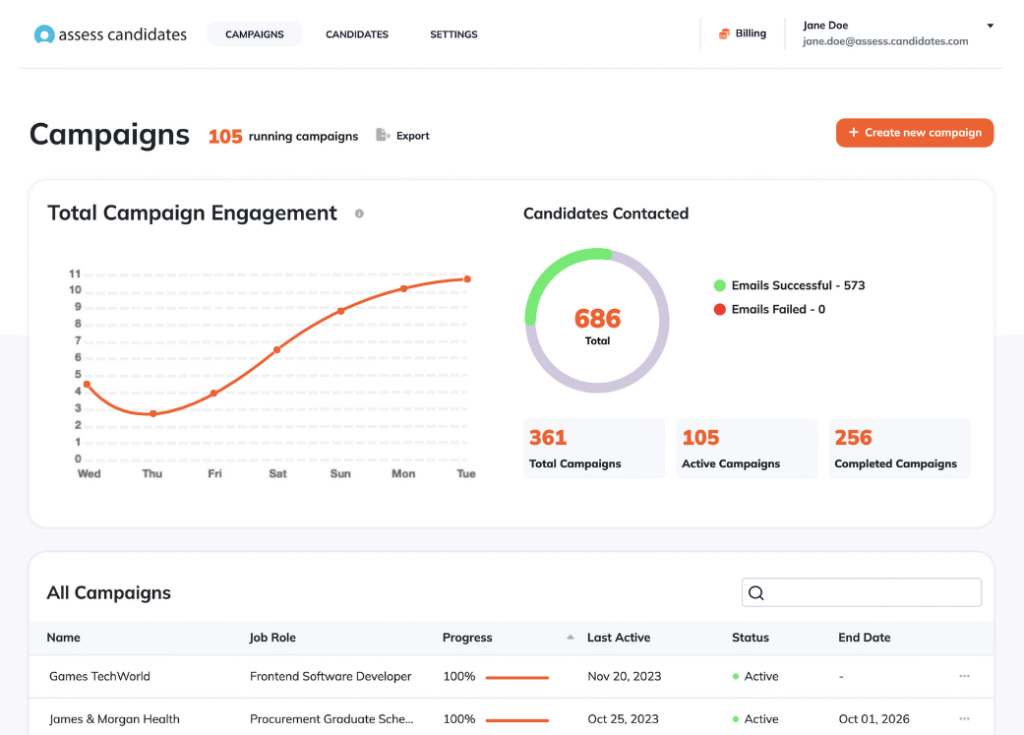
Below is a preview of the campaign reporting dashboard on the Assess Candidates Talent Assessment platform.
The top 4 reasons why you should use Assess Candidates’ personality test for enhancing your hiring process
- Expertly Designed and Scientifically Backed: Assess Candidates’ pre-employment tests, including personality tests, are developed by a team of Chartered Scientists, Psychologists, and Psychometricians with extensive experience at leading firms like SHL and IBM Kenexa. Each assessment undergoes rigorous validation to accurately measure personality traits, behavioral tendencies, and role-relevant characteristics.
This scientific foundation ensures your talent acquisition and development strategies are precise, reliable, and aligned with organizational goals, positioning your company as one that prioritizes data-driven, continuous growth.
- Actionable Insights to Guide Learning Pathways: Our platform provides intuitive, detailed reports highlighting individual and team personality profiles, communication styles, and potential fit for various roles. You can easily identify cultural fit challenges, leadership potential, and areas for development. These insights enable HR and L&D teams to tailor coaching, improve team composition, and align people strategies with business objectives.
- Positive Learner Experience that Reinforces Engagement: Assess Candidates offers mobile-friendly, interactive personality assessments that engage participants and build trust in the hiring process. The platform allows you to customize the experience to reflect your brand’s tone and values, creating a seamless and positive impression. A smooth, encouraging assessment journey boosts candidate motivation and reinforces your commitment to employee growth and well-being.
- Inclusive and Accessible for Every Employee: We design all personality tests with inclusivity in mind, ensuring every candidate and employee, regardless of ability, can participate fully. Features such as extended time options, screen reader compatibility, zoom functionality, and WCAG-compliant design support diverse needs, fostering a fair and equitable recruitment and development environment.
Assess Candidates stands as a leading provider of personality assessments and talent solutions, offering comprehensive tools suited for organizations of all sizes. Our intuitive platform empowers you to understand and develop your workforce better, enabling smarter, more effective hiring and people management.
Explore our personality questionnaire today and take a confident step toward building stronger, more engaged teams!
Unsure if personality tests are right for your recruitment process? Get in touch with us for a free-of-charge analysis of your hiring needs.
Interested in learning more about effective candidate assessment? Continue reading for frequently asked questions, and sign up with your email to get started.
Frequently Asked Questions
How does the Big Five Personality Test differ from the Myers-Briggs Type Indicator?
The Big Five Personality Test measures 5 traits along a spectrum, providing a nuanced and evidence-based view of personality that helps predict workplace behavior during recruitment. In contrast, the Myers-Brigg test groups people into 16 fixed types, making it popular in counseling, team-building, and personal development by encouraging reflection on strengths, communication, and blind spots.
What is the focus of the DISC Personality Test?
The DISC test classifies behavior into 4 styles, including Dominance, Influence, Steadiness, and Conscientiousness, reflecting how individuals tackle challenges, engage socially, adapt to change, and adhere to rules. By revealing these observable workplace behaviors, organizations can enhance communication, foster teamwork, and resolve conflicts more effectively.
Why do organizations use the Enneagram Personality Test?
Organizations use the Enneagram personality assessment to uncover the deeper motivations, fears, and desires that drive behavior. Unlike trait-based tests, it explores why people act as they do, helping teams enhance emotional intelligence, foster personal growth, and strengthen interpersonal relationships in both work and leadership environments.
Why is the Hogan Personality Inventory valued in workplace assessments?
The Hogan Personality Inventory (HPI) assesses typical personality traits that influence job performance and leadership potential. Rooted in socioanalytic theory, it examines how individuals navigate social dynamics to get along with others and advance their careers, providing valuable insights into workplace behaviors, potential challenges, and key factors for success.
What role do occupational-specific personality tests like SHL OPQ play in recruitment?
Occupational-specific tests such as the SHL OPQ assess traits closely connected to job performance and role suitability. They offer detailed insights into candidates’ workplace behaviors, enabling employers to make objective hiring decisions, create targeted development programs, and plan succession effectively, ensuring a strong alignment between personality and job requirements.


 English
  Arabic